Follower or Leader?
It's time.

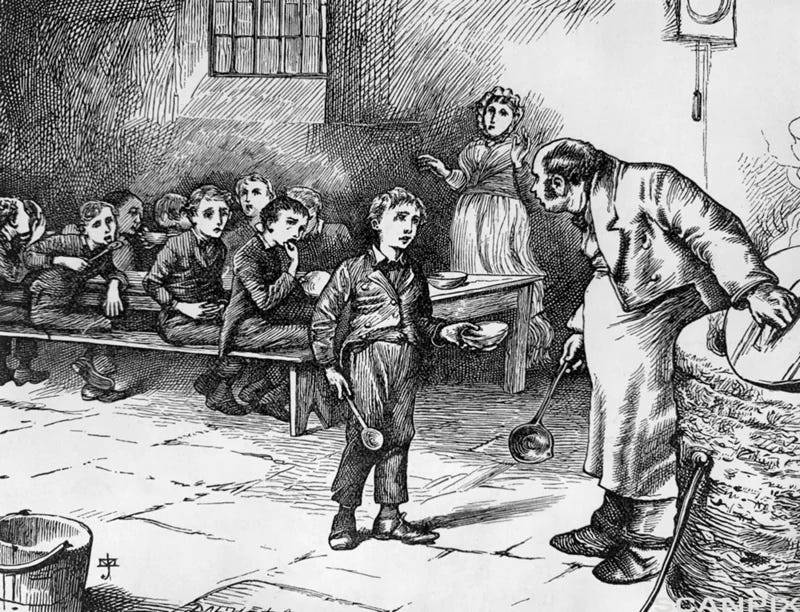
The weather got me thinking about our calendars. I think even the most ardent denier must be starting to think the evidence of their own eyes may be challenging their Putin-petro beliefs by now. I've always considered Feb-March to be the optimal time to take a break in our country. January seems to be increasingly about hunkering down and playing Cards Against Humanity.
We currently try to run a 21st-century, AI-driven economy using a social operating system designed for 19th-century Lancashire cotton mills. It’s clunky, it’s expensive, and it’s making us miserable.
We have two massive problems that are actually one big opportunity: a school system that fights adolescent biology, and a Holidays Act that is a billion-dollar compliance shitfest.
The Problem with "Factory Time"
Our current "9-to-3" school day and "9-to-5" work day are biological misfits. Science tells us that teenagers’ brains don't even wake up until 10:00 AM, yet we drag them into classrooms at dawn. Meanwhile, our national grid screams under the pressure of everyone turning on their kettles and AC at the same moment. Just when our factories are firing up for the day.
We’ve built our entire lives around "Time-Effort"—the idea that being at a workplace matters more than what you produce.
In an age of AI, that’s not just archaic; it’s a recipe for irrelevance. Productivity today is driven by creativity and innovation. You don’t get that from a sleep-deprived 16-year-old or a burnt-out parent stuck in a 5:00 PM motorway crawl.
Modular Lives
We have got to decouple the "Day" from the "Clock." And the countries that do this fastest will win.
First, let’s fix the schools. Move to a 360-half-day modular calendar. Use AI to handle the rote heavy lifting—the dates, the formulas, the drills—and turn our teachers into what they should be: high-value coaches and mentors. Younger kids, who are natural early birds, start early. Older students, whose brains are wired for a later shift, start late.
But this only works if we fix the workplace too. As I’ve argued before, we need to gut the Holidays Act. Abolish the statutory holidays that exist simply because some ancient northern hemisphere pagan festivals (notably Oester and Yuletide). Instead, give everyone a flat 30 days of annual leave and let them choose a Cultural Calendar.
Imagine a New Zealand where:
Family A chooses a "Solar-Sync" calendar. They work and learn during peak renewable energy hours (10 AM – 4 PM), saving the planet and their power bill.
Family B chooses a "Traditional" track to keep their weekends for sport.
Family C takes their leave days during a winter mid-term to head to the mountain when the slopes are empty and the traffic is non-existent.
Family D are committed to a religion. They select the Islamic, Hindu or Christian calendar.
Show Me the Money
Auckland’s traffic congestion alone is projected to cost $2.6 billion annually by 2026 in lost time, fuel, and supply chain delays. Our roads are free from congestion 80% of the time; the problem is the "Factory Rush."
The Dividend: By allowing families to nominate calendars that start and end outside the 8:00 AM – 9:00 AM peak, we achieve a natural 8% to 12% reduction in peak traffic—the same "holiday effect" we see in current school breaks. This effectively defers billions in planned highway expansions and "congestion busting" infrastructure.
New Zealand’s electricity system is under immense strain during the morning and evening "peaks" (7–9 AM and 5–9 PM). Meeting these peaks requires expensive, carbon-heavy peaking plants.
The Dividend: Modular school calendars and "Cultural Holidays" allow for demand-side management. By shifting high-energy educational and work activities to mid-day periods (aligned with peak solar generation), we reduce the "Capacity Market" costs. This lowers the base price of electricity for all New
Zealanders and accelerates our transition to a 100% renewable grid without requiring massive over-investment in capacity trunking. Oh, and that helps with resilience.
Primary research shows that personalized AI learning can improve student outcomes by up to 30% while reducing administrative burdens on teachers by 44%.
The Dividend: Transitioning teachers from lecturers to mentors isn't just about better education; it's about labour efficiency. By automating the rote components of the curriculum, we create a workforce that is AI-native. This addresses the Treasury’s ongoing concern regarding New Zealand’s lagging labour productivity, moving us from a low-skill, high-effort equilibrium to a high-value innovation economy.
The current complexity of holiday pay creates a massive dead-weight loss on the economy.
The Dividend: Removing the archaic rules around provincial anniversaries and northern hemisphere statutory holidays eliminates the need for the payroll cleanup industry. Businesses save on litigation and audit fees, and the risk of
"accidental debt" for employees is eliminated. A flat 30-day leave entitlement is simple to code, simple to audit, and provides a clear fiscal baseline for every employer in the country.
Most importantly, we stop treating people like units of production in a factory. A healthy, well-educated person under just the right amount of stress—with access to the best AI tools—is a productivity powerhouse.
We don't force people to vote, and we shouldn't force them to rest on a Monday just because it's a Provincial Anniversary. Let’s give the clock back to the people. Let the schools be hubs of science and art, let AI handle the drudgery, and let families decide when they want to be together.
It’s time to move past the industrial revolution. We have the tech, we have the science, and we certainly have the need. All we’re missing is the political spine to grasp the nettle.
Key Scientific References:
Circadian Rhythms: Delayed school start times are clinically linked to improved adolescent mental health (JCSM, 2024).
Economic Load: MBIE data confirms that demand-side flexibility is the most cost-effective path to a 100% renewable grid.
Productivity: The
"Bloom’s 2-Sigma" effect proves that personalised, AI-supported
tutoring outperforms traditional factory-style classrooms by 90%.
Note on Verified Sources: This proposal utilises the NZ Treasury’s Living Standards Framework as a primary metric, ensuring that "Time Use" and "Social Capital" are weighted equally with "Productivity."